How to Make UGC-Style Ads With AI (Step-by-Step)
Create UGC-style video ads with AI: the hook-demo-CTA script structure, casting a consistent AI creator, prompting for authentic handheld energy, and testing hooks at scale.
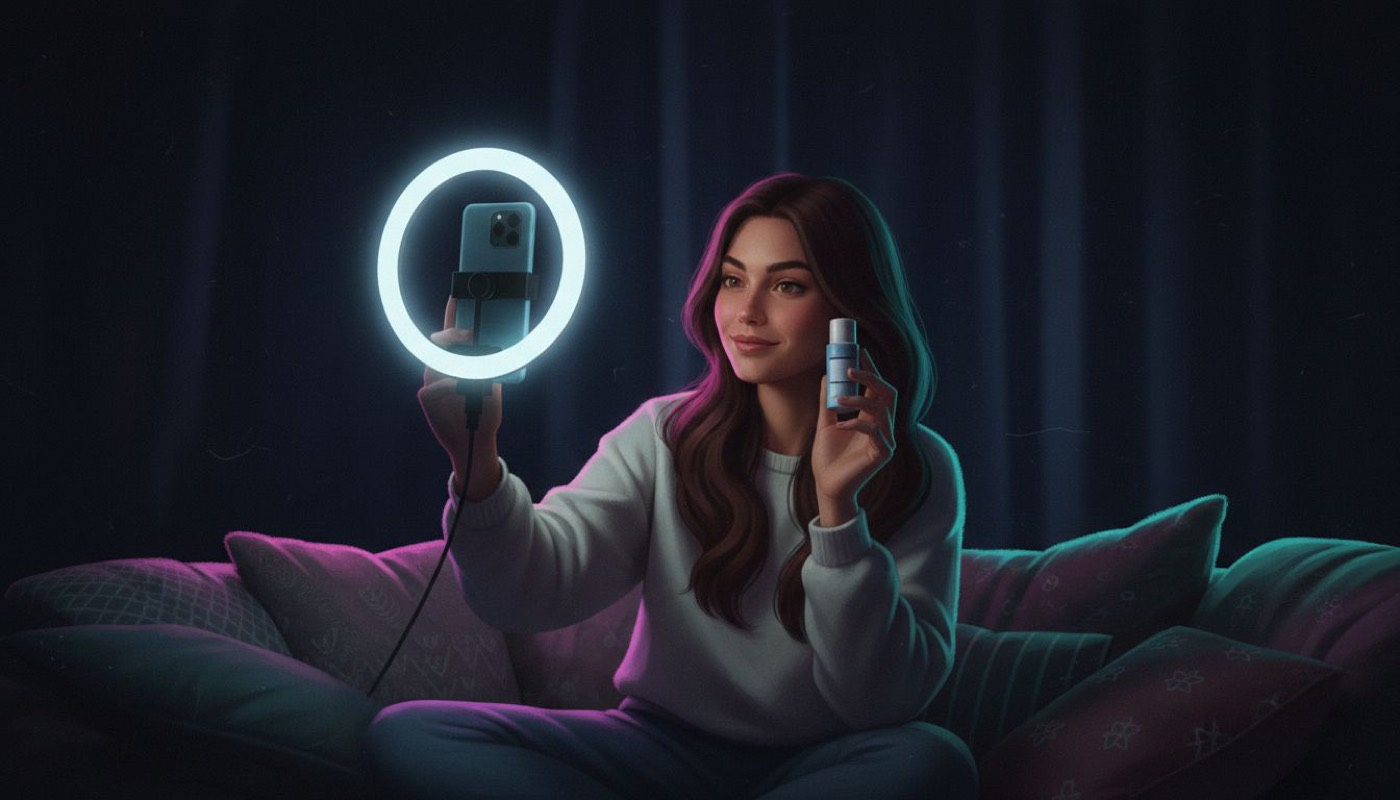
UGC-style ads — the handheld, talking-to-camera format that looks like a customer made it — remain the highest-converting creative on TikTok and Meta because they don't pattern-match as ads. The traditional bottleneck was sourcing creators: briefs, shipping product, waiting two weeks per variation. AI generation collapses that into an afternoon. Here's the full workflow.
Why UGC works (and what you must preserve)
UGC converts because of three signals: a real-feeling person, imperfect production (handheld, natural light), and a first-person claim. When you generate UGC with AI, these signals are exactly what you must engineer on purpose — polish is the enemy. Prompt for selfie framing, slight camera shake, daylight from a window, and casual wardrobe. "Too good" kills the format.
Step 1 — Write the script first
Every high-performing UGC ad follows the same 3-beat skeleton in 15–30 seconds:
- Hook (0–3s): a pattern-interrupting claim or problem. "I returned three standing desks before I found this one."
- Demo (3–20s): the product in use, one benefit shown not told, one objection pre-empted.
- CTA (final 5s): urgency or social proof plus the ask. "It's 30% off this week — link in bio."
Write 5 hooks per product. Hooks — not the demo — are what you'll test.
Step 2 — Cast your AI creator
Generate your "creator" as a still image first: age, style, energy, setting. Keep this image — it's your casting sheet. Animating that same image via image-to-video for every scene is what keeps the person consistent across the hook, demo, and CTA shots. (The mechanics: image-to-video vs text-to-video.)
A working casting prompt: Selfie-style photo of a woman in her late 20s, freckles, oversized grey hoodie, sitting on a bright apartment sofa, morning window light, slightly grainy phone-camera look.
Step 3 — Generate the beats
In SpeedReel the UGC format is a first-class option in the prompt assistant — pick it and the assistant asks about your talent, product, hook moment, and shooting style (selfie vs handheld vs tripod), then writes a timestamped, VO-ready prompt. Generate each beat as its own clip:
- Hook shot: creator to camera, energetic open. Draft on a budget model; upgrade keepers.
- Demo shots: product-in-hand close-ups. If the real product must appear exactly, start from a product photo via i2v.
- CTA shot: back to the creator, pointing gesture or held product.
Models with native audio (Veo 3.1 Fast in SpeedReel's picker) can generate the spoken line in-shot; otherwise generate clean shots and add VO in post.
Step 4 — Assemble like a media buyer
On the timeline: hook → demo → CTA, hard cuts, captions on from frame one (most feeds autoplay muted), music low under VO. Export vertical 9:16. Then duplicate the project and swap only the hook — five hook variants against the same body is the cheapest A/B matrix in advertising. This is where AI UGC crushes traditional sourcing: a new variation costs a couple of dollars in credits (cost math here), not a new creator contract.
Step 5 — Disclose properly
Platform and regulator rules on synthetic people in ads are tightening: Meta and TikTok both require disclosure toggles for AI-generated or significantly AI-altered ad creative, and the FTC's position is simply that ads can't mislead — a synthetic "customer" giving a fake testimonial is a claim problem, not an AI problem. Safe pattern: present the creator as a presenter of true product claims, not as a verified purchaser, and flip the platform's AI-disclosure toggle. It doesn't measurably hurt performance; deceptive-practice takedowns do.
FAQ
Do AI UGC ads actually convert? Media buyers report parity with human UGC when the script and hook discipline is equal — because the format's power was always the script, not the person's identity.
How many variants should I test? Start with 5 hooks × 1 body. Kill anything under your account's hook-rate baseline within 48 hours, then iterate on the survivors' angle.
Can I use a real customer's face? Only with explicit written consent. The cleaner route is a fully synthetic presenter — no likeness rights, no renewal negotiations.